
20 Romanian Foods & Dishes To Try Out

While Romania is often associated internationally with Dracula, Transylvania, and Nadia Comăneci, its cuisine remains one of its most underrated treasures. Traditional Romanian food brings together simple, local ingredients with a rich mix of influences from neighboring cultures, including Balkan, Turkish, Serbian, German, and Hungarian cuisines.
Beyond well-known staples like sarmale and cozonac, and the country’s many beloved pork dishes, you’ll discover a wide variety of regional specialties and local interpretations. Along the Danube and in Dobrogea, near the Black Sea, fish dishes are especially popular, with saramură being a must-try. In the northeast, you’ll notice Ukrainian influences, such as borș, while in Transylvania, Hungarian and German culinary traditions are strongly reflected in the local cuisine (e.g. goulash is a popular dish served in local restaurants).
Below, you’ll find some of the most popular traditional Romanian dishes to try (or cook—recipes are included for many of them) when visiting the country.
1. Sarmale (Romanian Stuffed Cabbage Rolls)
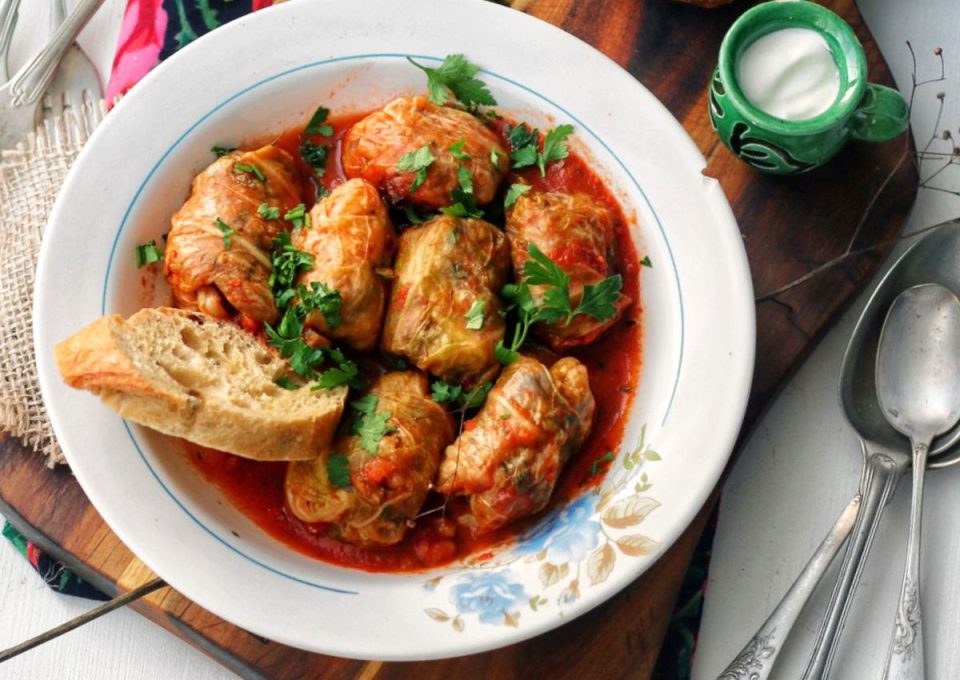
If you ask Romanians what the most iconic and must-try food in Romania is, sarmale will almost certainly top the list.
Sarmale are cabbage rolls stuffed with a mixture of ground meat (usually pork and veal), rice, and herbs. It’s a hugely popular dish across Eastern Europe and the Balkans, but Romanians would swear their version is the best. Sarmale are simply delicious when served with a generous spoonful of sour cream and some bread. It’s true comfort food and present at every traditional Romanian wedding, major holiday like Easter and Christmas, and enjoyed year-round.
In some parts of the country, sarmale are made with vine leaves instead of cabbage, and the cabbage itself can be either fresh or, more commonly, pickled (sauerkraut). For fasting periods or a vegan option, the meat can be successfully replaced with a mixture of ground nuts, grated carrots, and chopped mushrooms.
Of course, you’ll find sărmăluțe on the menu of almost every traditional restaurant, typically served with sour cream and hot mămăligă—which brings us to the next staple dish.
2. Mici

What I would rate as the second most popular Romanian dish—and probably the most ordered item at traditional restaurants, as well as a staple at grills and outdoor events—mici are a must-try.
They resemble skinless sausages or ground-meat kebabs and are typically made from a mix of pork and beef, seasoned with garlic and spices. Most Romanians buy the prepared meat mixture from supermarkets or local butcheries, and everyone seems to have their favorite go-to spot.
You can smell them from miles away. Juicy on the inside and nicely charred on the outside, they’re best enjoyed simply—with mustard and fresh, crusty bread, and sometimes a side of fries.
3. Mămăligă (Romanian Polenta)

This humble yet iconic Romanian dish deserves a top mention, as it has played such an important role in the country’s culinary history.
Mămăligă is similar to Italian polenta and is made quickly by boiling cornmeal in water with a pinch of salt and a few drops of sunflower oil. Today, it’s mostly served as a side dish alongside stews, fish, or sarmale, but not so long ago, it was often a meal on its own. It was commonly enjoyed with cheese, milk (especially for children), or paired with sausages and fried eggs.
Because it was so cheap and easy to prepare, mămăligă became a staple food for many Romanians, particularly in rural areas.
4. Ciorbă de burtă (Beef Tripe Soup)

If you’re feeling a bit adventurous when traveling and want to try some unique local delicacies, you should give ciorbă de burtă a try. It’s one of the most popular soups in Romania and can be found in almost every traditional restaurant. In essence, it’s a beef tripe soup.
Be warned, though—it’s not for everyone. It’s very much a love-it-or-hate-it kind of dish. While many Romanians absolutely love it, others wouldn’t go near it.
Often considered the ultimate hangover remedy, tripe soup is made from thoroughly cleaned beef stomach, combined with vegetables, plenty of garlic, and soured with vinegar. It’s typically served with hot chili peppers on the side, which pair perfectly with its rich, tangy flavor.
5. Ciorbă Rădăuţeană (Chicken Soup)

Romanians love their soups, and you’ll almost always find at least two or three options in local restaurants (often many more). If you’re not quite ready to try tripe soup, this is a much safer (and equally delicious) choice.
This popular Romanian chicken soup, known as ciorbă rădăuțeană, takes its name from the town of Rădăuți in Bucovina, a region in northern Romania renowned for its rich culinary traditions.
It has a creamier, richer consistency than most chicken soups, thanks to the addition of eggs and sour cream, along with plenty of vegetables and tender chicken. It’s one of the country’s most beloved dishes and a favorite among kids and adults alike.
6. Cozonac (Romanian Sponge Cake)

There is no holiday in Romania without this traditional treat.
Cozonac is a type of sweet bread, similar to a sponge cake, filled with walnut paste, cocoa, Turkish delight, or raisins. It’s soft, light, and pairs perfectly with a cup of coffee or a glass of milk.
Making a great cozonac is not easy, which is why many Romanians nowadays prefer to order it from local bakeries rather than prepare it at home. Kneading the dough is quite demanding, and the whole process takes time, but the result is truly worth it.
While it’s a must-have for holidays and special occasions, cozonac can be found year-round in bakeries and at local fairs. If you get the chance to try it, don’t forget to compliment the baker on their recipe and skill in making this beloved Romanian delicacy.
7. Papanași (Romanian Fried Donuts)

While cozonac is the most popular holiday treat, papanași are arguably the most popular dessert served in traditional Romanian restaurants—and they are absolutely irresistible.
Papanași are traditional deep-fried cheese doughnuts, typically served with a generous topping of sour cream and fruit jam. You’ll find them on the menu of nearly every traditional Romanian restaurant, and they’re a must-try when visiting the country.
To the confusion of many foreign tourists—and even some Romanians—the name papanași also refers to a different dessert: boiled cottage cheese dumplings. These can also be served with jam, but they are quite different in both taste and texture from the fried version. So when ordering in a Romanian restaurant, it’s always a good idea to check which type of papanași is on the menu.
8. Pomana Porcului (Pork Stew)

Pork is the meat of choice in Romania, and this dish has deep roots in traditional rural life, especially in the custom of pig slaughtering before Christmas.
Fresh cuts of meat from the newly slaughtered animal are fried in their own fat in a deep pan. It’s a very hearty dish, as pigs were traditionally raised to be quite fatty, so this is definitely not a lean meal. But if you love pork and come hungry, it’s a real treat.
You’ll often find this dish on restaurant menus (sometimes served alongside fried sausages), and it’s best enjoyed with pickles and mămăligă.
9. Grilled Pork (Ceafă de porc / Cotlet de porc)
As mentioned earlier, pork is the meat of choice in Romania, and Romanians also have a strong love for barbecue. The two come together perfectly in dishes like ceafă de porc (pork neck) and cotlet de porc (pork chops).
These grilled pork dishes are ubiquitous in Romanian restaurants and are definitely worth trying. The meat is typically juicy, well-seasoned, and cooked over an open flame or grill for that unmistakable smoky flavor.
They’re usually served with potatoes—fried, mashed, or oven-baked—along with mujdei (a simple but delicious garlic sauce) and a fresh salad.
10. Zacuscă: Romanian Roasted Vegetable Spread

In late summer and early fall, kitchens across Romania are filled with the rich aroma of grilled eggplants and red peppers: the key ingredients in zacusca.
Zacusca is Romania’s beloved vegetable spread, a flavorful blend of roasted eggplants, peppers, onions, and tomatoes. It’s somewhat similar to caponata, the classic Sicilian eggplant dish, both in its rich, slow-cooked texture and its use of seasonal vegetables.
There are many variations of zacusca. While the most popular version is made with eggplant, you’ll also find recipes featuring beans or even mushrooms.
It’s a must-try when visiting Romania. You can enjoy it as a starter in many traditional restaurants or buy it in jars from almost any local grocery store.
11. Slănină, Caltaboș si Jumări

Sticking with pork, two traditional Romanian specialties you should try are jumări and slănină.
If you enjoy Spanish chicharrón, you’ll likely love jumări—crispy, salty bites made by frying pieces of pork fat until golden and crunchy. They’re typically served cold and enjoyed as a starter, often alongside raw onions and a shot of țuică, the traditional Romanian plum brandy.
Slănină, on the other hand, is cured pork fat, similar to Ukrainian salo, and especially popular in Transylvania. It has a high fat content and is usually served thinly sliced, with bread, salt, paprika, and sometimes raw onions. It may sound simple, but it’s a deeply traditional and flavorful dish.
Caltaboș is a traditional Romanian sausage prepared mainly for the winter holidays, especially around Christmas. It is made from pork offal (such as liver, lungs, heart, and sometimes head meat) mixed with rice or barley, onions, and spices like pepper and bay leaf, then stuffed into natural casings and boiled.
Despite being called a sausage, its texture and taste are closer to a coarse liver pâté than to a typical meat sausage.
12. Drob de miel (Lamb Haggis)

Lamb haggis (drob de miel) is a festive Romanian Easter dish that resembles a savory meatloaf, often with boiled eggs baked inside. While it’s prepared exclusively for Easter, it’s an iconic part of Romanian cuisine and a must-try if you’re visiting during the holiday.
Recipes vary from region to region—and even from one family to another—but a few core elements remain the same. This traditional dish is made with minced lamb offal, green onions, eggs, and bread soaked in milk, all mixed with fresh herbs like dill and parsley, as well as garlic. In some variations, pork or chicken livers are added for extra flavor.
Drob de miel can be served either as a main course with side dishes or, more commonly, as a flavorful appetizer as part of the Easter spread.
13. Salata De Boeuf (Beef Salad)

You’ll rarely find this dish in local restaurants, but it is actually one of the most popular Romanian appetizers, if not the most popular. It’s a staple at festive dinners and special occasions and closely resembles Olivier salad, also known as Russian salad.
Traditionally, it’s made with boiled beef and vegetables, all finely diced and mixed with plenty of homemade mayonnaise, then finished with pickles for a tangy contrast.
While the original recipe uses beef, many Romanians nowadays prepare it with chicken instead, creating a lighter version of this classic dish.
14. Ciorbă de Perișoare (Meatball Soup)

Another very popular traditional soup is ciorbă de perișoare, especially loved by children. It’s a sour soup, typically flavored with sauerkraut brine and fresh lovage, and made with plenty of vegetables and tender meat dumplings.
The recipe begins with preparing the dumplings, made from minced pork or veal mixed with onions, rice, egg, and fresh herbs. The vegetables—usually carrots, onions, and peppers—are chopped and lightly sautéed, then simmered in stock. The dumplings are added and cooked until tender. The soup is finished with sauerkraut brine for acidity and often enriched with a mixture of sour cream and egg yolks for a creamy texture.
15. Salata de Vinete (Eggplant Salad)

This eggplant salad, known locally as salată de vinete, is arguably one of the best Romanian dishes and certainly one of the most popular appetizers. If you haven’t tried it yet, you absolutely should.
It’s especially beloved in late summer and early fall, when eggplants and fresh tomatoes are in season, but it remains a staple throughout the colder months as well. Traditionally, during winter and the holiday season, it was often prepared using roasted eggplants that had been frozen, ensuring it could be enjoyed year-round.
16. Ciorbă de fasole cu afumătură (Bean Soup)

This hearty bean soup is a must-try when visiting a traditional Romanian restaurant. It’s often served in a hollowed-out loaf of bread, which makes for a truly impressive presentation.
Rich and filling, the soup is flavored with smoked pork and typically served with a dollop of sour cream and fresh sliced onions on the side.
17. Amandina (Amandin)

If you have a sweet tooth and love chocolate decadence this traditional Romanian dessert is a must-try. The dark chocolate layers are tanked with a sweet, aromatic syrup made out of rum and caramelized sugar.
In between the two layers there’s a rich, unctuous chocolate buttercream ganache. And on top, for a great crunch and a little bit of texture you can find a sweet fondant made out of chocolate and rum. It’s one of the best desserts in Romania and it goes great with a black coffee.
Check out the recipe here.
18. Chicken Soup w/ Semolina Dumplings: Supă cu Găluşte

Not another soup, you might say, but Romania really is a soup lover’s paradise. Traditionally, both lunch and dinner often begin with a soup, so yes, it’s a big part of everyday life here.
Interestingly, Romanian even has two distinct words for soup: supă and ciorbă—and locals will quickly correct you if you mix them up. Supă refers to clear, mild soups, usually without any sourness, while ciorbă is reserved for soups that are tangy or acidic, often soured with ingredients like vinegar, lemon juice, or fermented bran (borș).
Supă cu găluște is one of the most comforting examples of the first category. It’s a clear chicken soup served with soft, fluffy semolina dumplings that practically melt in your mouth. Simple, delicate, and deeply satisfying, it’s a favorite for both kids and adults alike.
19. Trout (Păstrăv)

If you visit almost any restaurant in Romania (outside the Danube Delta and Black Sea regions) that serves fish, trout will almost certainly be on the menu.
It’s a tasty, locally farmed fish, usually served whole, either grilled or lightly coated in cornflour and fried, alongside garlic sauce (mujdei) and mămăligă.
Lightly flavored and delicate, trout makes for a delicious and relatively healthy meal.
20. Savarina
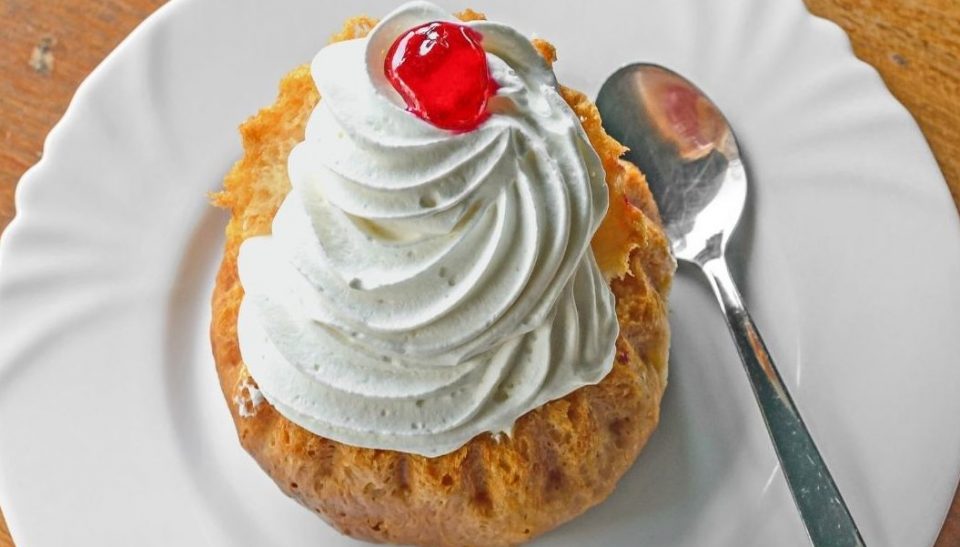
Walk into a Romanian confectionery and you’ll be finding this juicy, aromatic, syrupy, moist, decadent dessert!
A kind of donut is made from flour, milk, oil, yeast, eggs, and sugar. Once baked and cooled, they are soaked (like extremely soaked) in sugar and rum syrup. Finally, the cake is filled with whipped cream and sometimes topped with forest fruit jelly.
Romanian food may not look very fancy but it’s very tasty and inviting. The recipes are being passed forward through generations without losing their identity or taste. If you like Romanian cuisine, you might also be interested in the following:
- Most popular Romanian soups
- Most popular Romanian cheeses
- Guide to Romanian wine
- Top 10 Romanian cookbooks
- Top 10 Romanian red wines
- Top 10 Romanian white wines

Aici au dreptul sa comenteze tot felul de oameni! Pana la urma, tema era gustul mancarii si unde se gaseste ea, ci nu de unde este ea inspirata. Peste tarisoara asta au trecut multe natii……..si inca mai trec. Daca prostia ar doare…..ar face ravagii si am sta toti in spitale! Inclusiv tu!
What I know is that Jesus did not eat potatoes, tomatoes or drink coffee!! He was from Timisoara and fanatic of “mici”
This was very useful for my research on Romania. Thank you!!!
You forgot Varse la Cluj(diced cabbage with meat and rice)
1,3 and 6 are not Romanian. Mostly from Balkan( Serbia, Bosnia, Macedonia) it is nothing new that Romanians are stealing things just like language.
To my personal opinion, probably only polenta is Romanian. Greek youghurt sounds also very strange. Why east europeans are so afraid to accept Bulgaria as a factor. History confirms it.
That is just uncalled for, Romanians are really warm and nice people. Perhaps you are just jealous on their delicious food. Also, all food in Europe is “borrowed” somehow from other cuisines, you’d be surprised to find out that your glorious cuisine is also “stolen” from Albania, Turkey, Hungary, Bulgaria etc. Also read more about language, as it is based remotely on Latin because the Romans conquered them.
Why do you hate? are you really that upset? Did they steal your language? What language should they be speaking? How are #1 #3 not Romanian food?
Polenta is Italian, history confirms it LMAO, what you are looking at is Mamaliga, all Eastern European countries have very delicious cuisine, being that they have been influenced by many some of these food may look similar but the taste differ, and a question for you Mr History and Rile who came first, the chicken or the egg? How do you know the other cultures didn’t get inspired by Romanians? if you don’t like the food don’t eat it, stop hating.
They are not stolen. In the Balkans we each have our own variant of the same thing. I know that ”Mici” is Cevapcici, I know that Sarmale is also made in Turkey, I do not know the ”yugoslavian” or serbian version of jumări, although I live close to you in Timișoara, but I know that they make them in the Southern States of USA in the same way. We borrowed things from one another. ”Salată de vinete” is what Persians and other Eastern countries call Baba Ghanoush. We have dishes enharited from those who ruled in these parts – Turks, Austro-Hungarians – we have paprikaș, the Hungarians have goulash, I am sure you have a potato stew with meat and paprika as well.
You should read up on your history. Your comment clearly shows ignorance.
I love salata de beouf🤤🤤
I’m from Scotland 🏴 and I’m researching about your country there r is so much cool things like Salina turda &the Merry cemetery 🪦
Si eu am facut salata de beouf🤤🤤
Are there any vegetarian options?
mamaliga
Yes, you can make “sarmale” or “salata de boeuf”without meat but they won’t have the same good taste.
Amazing loved it.
sarmale are the best and I’m Romanian and I love it
Thanks so much I am doing a school project on Romania and this was a big part of my research…
YOU ARE AMAZING
si eu am facut ciorba de burta azi
We are searching for the Romanian chocolate imbibed desert small tarts called MACOTA – around cake like – and JOFRE – vertical finger-like delicacy
Good food?
Yes it’s really delicious
Tochitura Moldoveneasca nu?
Am facut si eu astazi o oala de sarmale
Amazing